3.Mr Known-all
课本页数: 53 作者: Somerset Maugham
生词
porthole    n舷窗
wardrobe    n衣柜
patron  n主顾
brilliantine    n润发油
ebony   a乌木制的
monogram    n姓名首字母排列
scrub   v擦洗
jolly   adv非常
tactlessly  a不得体的
sturdy  a坚定的
fleshy  a肉质的
lustrous    a有光泽的
sleek   a光滑的
lustrous    a有光泽的
sleek   a光滑的
curly   a卷曲的
exuberant   a精力充沛的
ginger  n姜
ale n麦芽酒
steward n乘务员
patriotic   a爱国的
drapery n布料
flourished  v挥舞
exasperating    a令人恼怒的
snub    冷落
slam    v猛地一关
dawn    n黎明
auction n拍卖
hearty  a热情友好的
jovial  a快活的
loquacious  a多话的
affront n冒犯
overweening a自负的
vanity  n虚荣心
frigidly    a冷淡的
indifferent a冷淡的
dogmatic    a教条的
cocksureness    非常确信
acrimonious a讥讽地
interminable    a冗长的
bulge   v肿
demeanor    n风度举止
cunning a狡猾的
diminish    v减弱
fling   v扔
vehement    a激烈的
voluble a健谈的
stung   v刺
thump   v撞击
triumphantly    adv耀武扬威的
cultured    a人工培养的
flush   v发红
flicker v闪烁
deprecating a不以为然的
clasp   v紧扣
cocksure    a确信的
chaff   n谷物
scraping    a刮擦的
reddened    v脸红
往届考过的大题
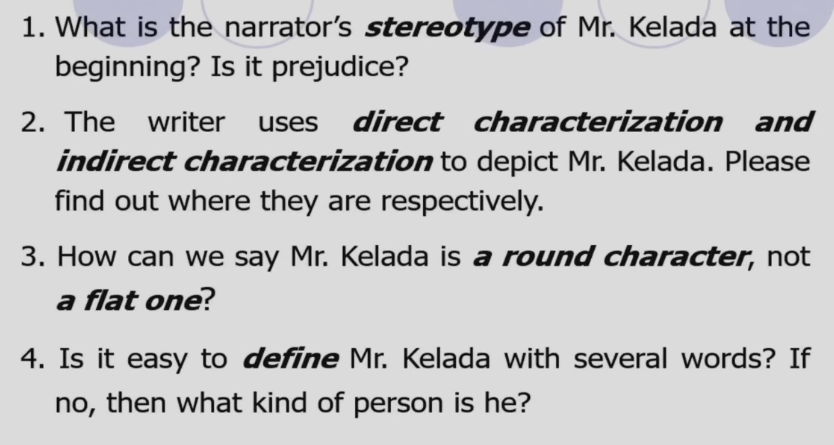
第 1 小题:人物塑造(charazterization)的两种方法是什么(直接和间接,p38,两种方法是什么也要详细阐述一下)结合改手法分析一下小说是如何塑造主人公 Kelada 的
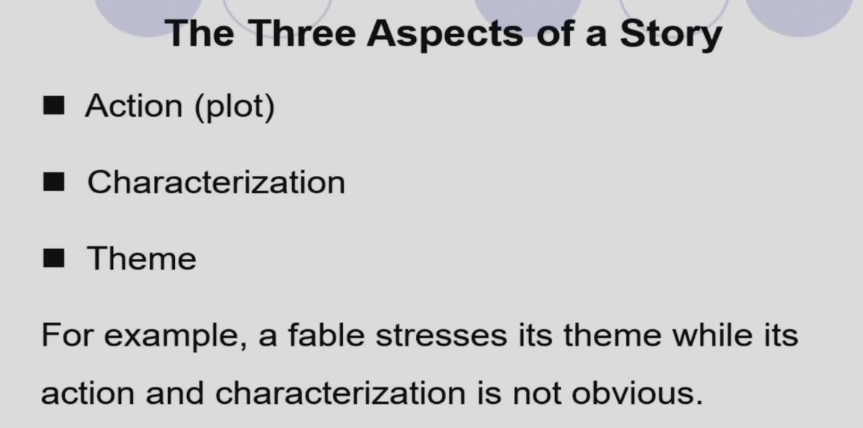
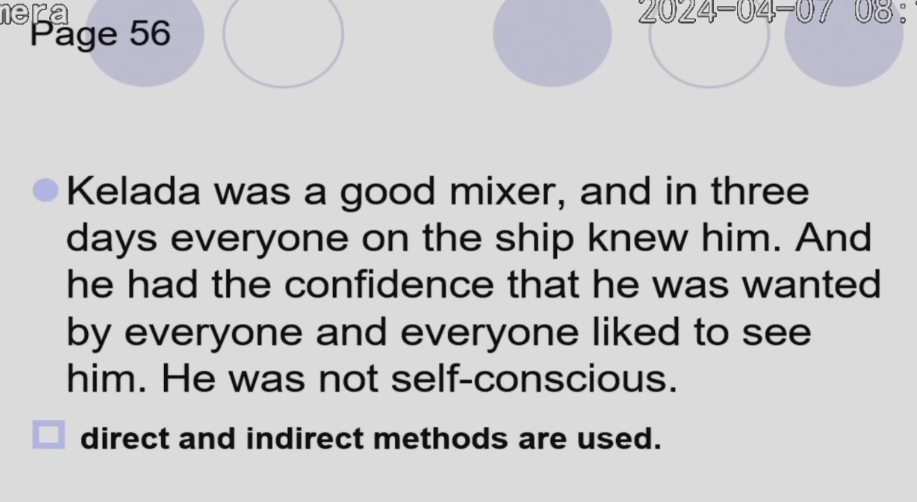
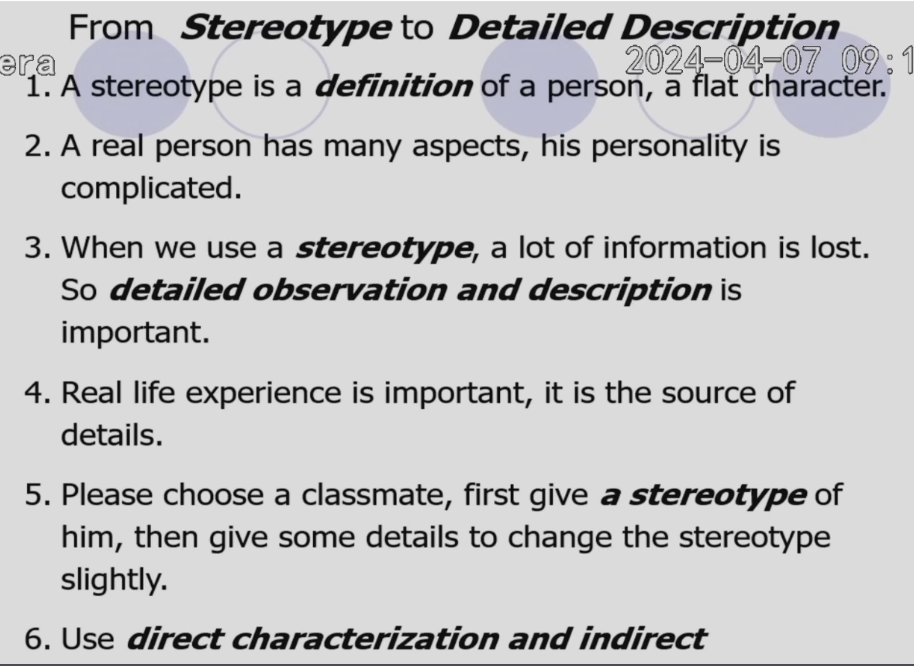
There are two fundamental methods of characterization in fiction, the direct method and the indirect method. These two methods can be summarized as"telling" and "showing.” Characterization can be direct, as when an author "tells“ readers what a character is like by description.
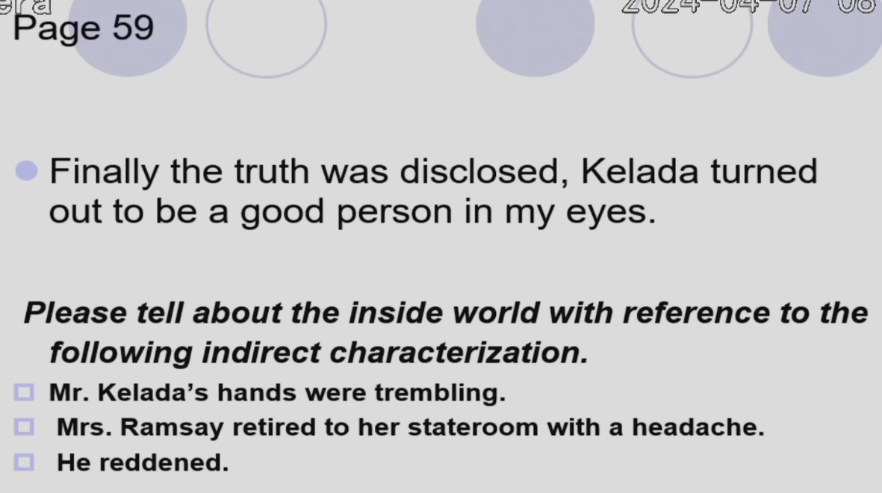
In indirect characterization, the author shows what a character is like by portraying his actions, speech, or thoughts, expecting the reader to form an opinion of the person through the character's action, dialogue, or mannerism.
So the indirect characterization leaves the reader a job to obserye the character and to find out what he is by making judgment from what he does.
The revelation of a character's mind, the inner life of thoughts and emotions, especially in the form of stream of consciousness(意识流),is also a way of indirect characterization.
In this story, the protagonist Kelada is characterized primarily through a combination of direct and indirect characterization.
Direct Characterization
- The author directly describes Kelada’s appearance, noting that he is short, sturdy, dark-skinned
- Kelada’s actions and habits are also directly portrayed. He is talkative, proactive in making conversation
Indirect Characterization
- Through Dialogue: Kelada’s confidence and stubbornness are revealed through his dialogues with the narrator and other characters.
- Through Others’ Reactions: The reactions of other characters to Kelada also indirectly characterize him. The narrator’s initial dislike and other passengers’ ridicule illustrate how Kelada’s behavior affects others.
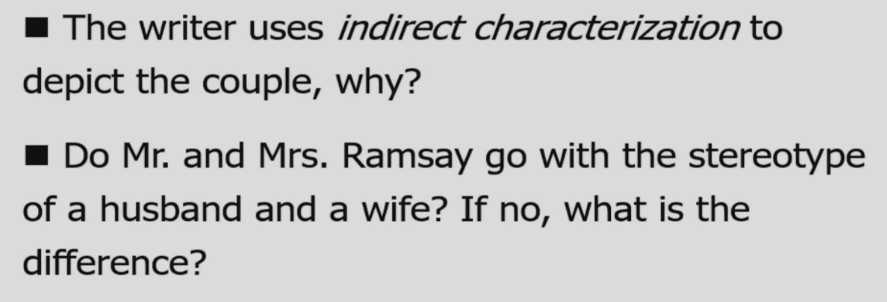
第 2 小题:什么是 round character,什么是 flat character,Ramsay 的夫人属于哪一个,请分析她的性格特点
the round character and the flat character, or the dynamic character and the static character.
The round character is often complex, having sometimes contradictory traits and internal conflicts that we find in real people.(具有我们在现实中发现的某些矛盾特征和内在冲突。) He grows and undergoes some kind of change in the course of the story development as he reacts to events and to other characters. Miss Brill in Unit Three is a round character.
A flat character reveals only one or two personality traits in a story and the unchanging trait or traits can be easily described in a brief summary, so often this kind of character is instantly recognizable to most readers. A flat character remains the same throughout a story and the events in the story do not alter a flat character's outlook, personality, motivation, perception or habits. When you read Unit Eleven "The Secret Life of Walter Mitty,"you may find its protagonist a typical flat character and an anti-hero.
In the pearl necklace episode, she reveals emotions of fear and despair, indicating that she harbors secrets and pain within. Despite her calm exterior, there are complex emotional conflicts deep inside her. However, this internal complexity is not fully developed or expanded upon. Therefore, although she is portrayed as a character with an elegant exterior hiding secrets, her personality traits are relatively simple, aligning with the definition of a flat character.
正文
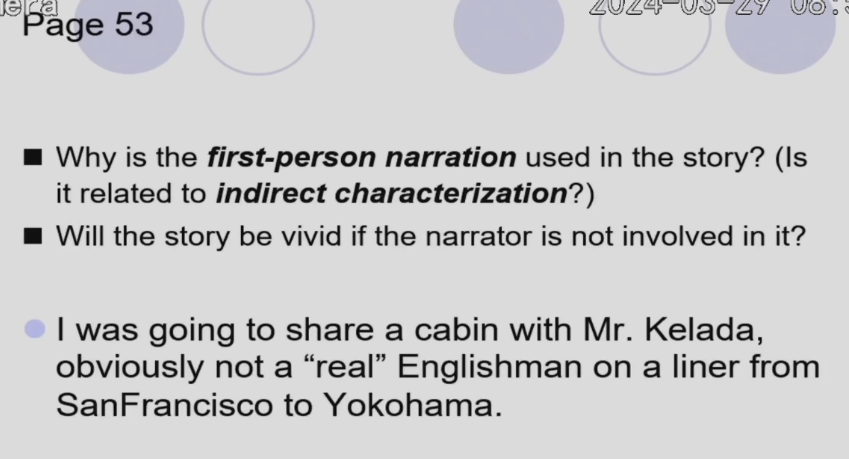
1 I was prepared to dislike Max Kelada even before I knew him. The war had just finished and the passenger traffic in the ocean-going liners was heavy. Accommodation was very hard to get and you had to put up with whatever the agents chose to offer you. You could not hope for a cabin to yourself and I was thankful to be given one in which there were only two berths. But when I was told the name of my companion my heart sank. It suggested closed port-holes and the night air rigidly excluded. It was bad enough to share a cabin for fourteen days with anyone (I was going from San Francisco to Yokohama, but I should have looked upon it with less dismay if my fellow-passenger's name had been Smith or Brown.
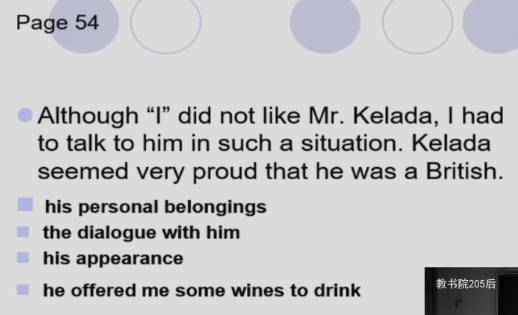
2 When I went on board I found Mr. Kelada's luggage already below. I did not like the look of it; there were too many labels on the suitcases, and the wardrobe trunk was too big. He had unpacked his toilet things, and I observed that he was a patron of the excellent Monsieur Coty; for I saw on the washing-stand his scent, his hair-wash, and his brilliantine. Mr. Kelada's brushes, ebony with his monogram in gold, would have been all the better for a scrub. I did not at all like Mr. Kelada. I made my way into the smoking-room. I called for a pack of cards and began to play patience. I had scarcely strarted before a man came up to me and asked me if he was right in thinking my name was so-and-so.
"I am Mr. Kelada," he added, with a smile that showed a row of flashing teeth, and sat down.
"Oh, yes, we're sharing a cabin, I think."
"Bit of luck, I call it. You never know who you're going to be put in with. I was jolly glad when I heard you were English. I'm all for us English sticking together when we're abroad, if you understand what I mean."
I blinked.
"Are you English?" I asked, perhaps tactlessly.
"Rather. You don't think I look an American, do you? British to the backbone, that's what I am."
To prove it, Mr. Kelada took out of his pocket a passport and airily waved it under my nose.
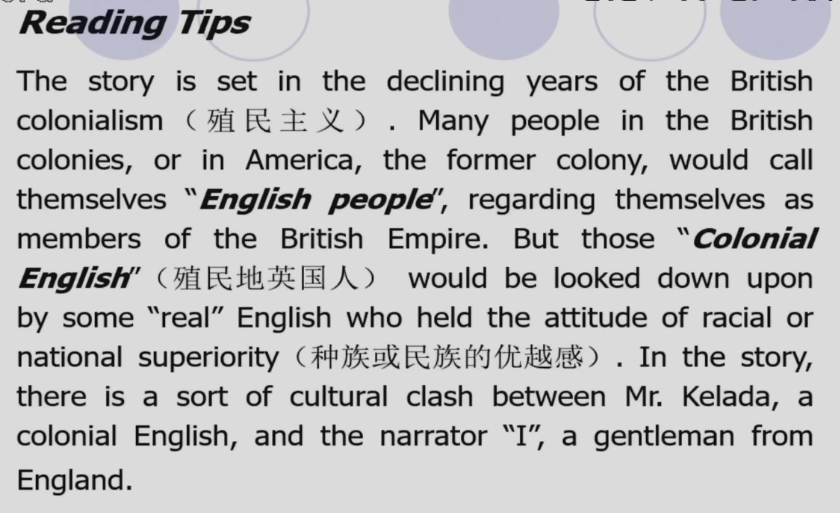
King George has many strange subjects. Mr. Kelada was short and of a sturdy build, clean-shaven and dark-skinned, with a fleshy, hooked nose and very large, lustrous and liquid eyes. His long black hair was sleek and curly. He spoke with a fluency in which there was nothing English and his gestures were exuberant. I felt pretty sure that a closer inspection of that British passport would have betrayed the fact that Mr. Kelada was born under a bluer sky than is generally seen in England.
"What will you have?" he asked me.
I looked at him doubtfully. Prohibition was in force and to all appearances the ship was bone-dry. When I am not thirsty I do not know which I dislike more, ginger-ale or lemon-squash. But Mr. Kelada flashed an oriental smile at me.
"Whisky and soda or a dry Martini, you have only to say the word."
From each of his hip-pockets he fished a flask and laid them on the table before me. I chose the Martini, and calling the steward he ordered a tumbler of ice and a couple of glasses.
"A very good cocktail," I said.
"Well, there are plenty more where that came from, and if you've got any friends on board, you tell them you've got a pal who's got all the liquor in the world."
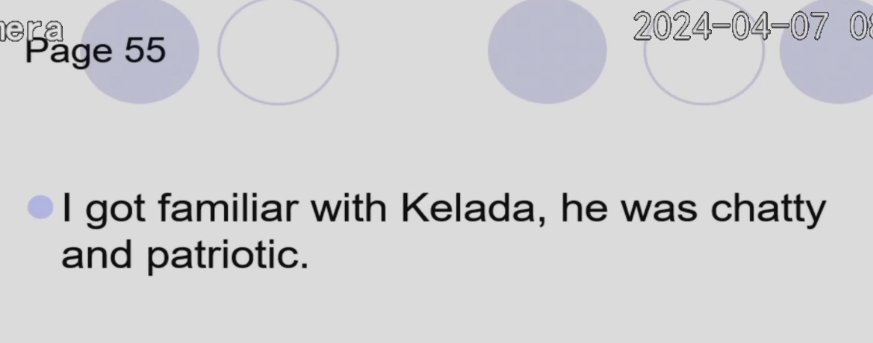
Mr. Kelada was chatty. He talked of New York and of San Francisco. He discussed plays, pictures, and politics. He was patriotic. The Union Jack is an impressive piece of drapery, but when it is flourished by a gentleman from Alexandria or Beirut, I cannot but feel that it loses somewhat in dignity. Mr. Kelada was familiar. I do not wish to put on airs, but I cannot help feeling that it is seemingly in a total stranger to put mister before my name when he addresses me. Mr. Kelada, doubtless to set me at my ease, used no such formality. I did not like Mr. Kelada. I had put aside the cards when he sat down, but now, thinking that for this first occasion our conversation had lasted long enough, I went on with my game.
"The three on the four," said Mr. Kelada.
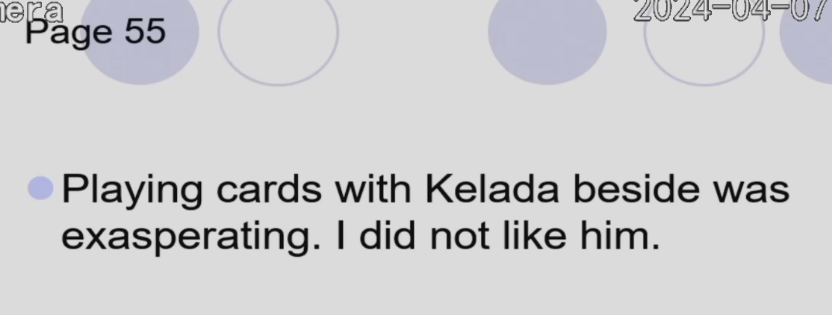
There is nothing more exasperating when you are playing patience than to be told where to put the card you have turned up before you have had a chance to look for yourself.
"It's coming out, it's coming out," he cried. "The ten on the knave."
With rage and hatred in my heart I finished. Then he seized the pack.
"Do you like card tricks?"
"No, I hate card tricks," I answered.
"Well, I'll just show you this one."
He showed me three. Then I said I would go down to the dining-room and get my seat at table.
"Oh, that's all right," he said. "I've already taken a seat for you. I thought that as we were in the same state-room we might just as well sit at the same table."
I did not like Mr. Kelada.
I not only shared a cabin with him and ate three meals a day at the same table, but I could not walk round the deck without his joining me. It was impossible to snub him. It never occurred to him that he was not wanted. He was certain that you were as glad to see him as he was to see you. In your own house you might have kicked him downstairs and slammed the door in his face without the suspicion dawning on him that he was not a welcome visitor. He was a good mixer, and in three days knew everyone on board. He ran everything. He managed the sweeps, conducted the auctions, collected money for prizes at the sports, got up quoit and golf matches, organized the concert, and arranged the fancy-dress ball. He was everywhere and always. He was certainly the best-hated man in the ship. We called him Mr. Know-All, even to his face. He took it as a compliment. But it was at meal times that he was most intolerable. For the better part of an hour then he had us at his mercy. He was hearty, jovial, loquacious and argumentative. He knew everything better than anybody else, and it was an affront to his overweening vanity that you should disagree with him. He would not drop a subject, however unimportant, till he had brought you round to his way of thinking. The possibility that he could be mistaken never occurred to him. He was the chap who knew. We sat at the doctor's table. Mr. Kelada would certainly have had it all his own way, for the doctor was lazy and I was frigidly indifferent, except for a man called Ramsay who sat there also. He was as dogmatic as Mr. Kelada and resented bitterly the Levantine's cocksureness. The discussions they had were acrimonious and interminable.
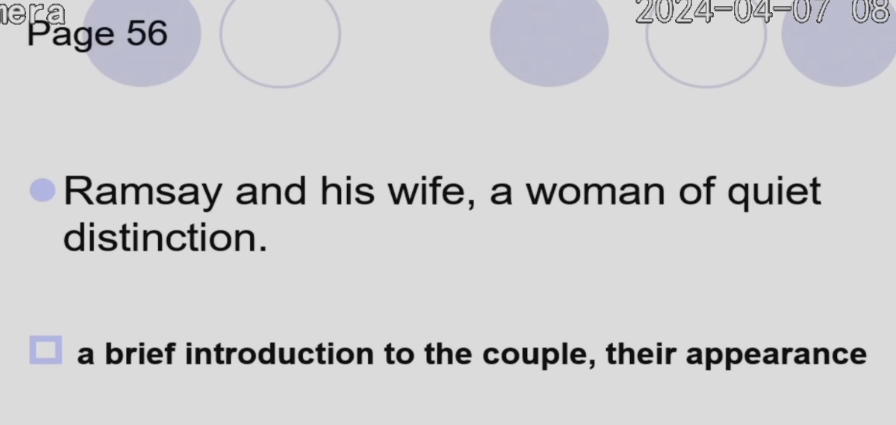
Ramsay was in the American Consular Service, and was stationed at Kobe. He was a great heavy fellow from the Middle West, with loose fat under a tight skin, and he bulged out of his ready-made clothes. He was on his way back to resume his post, having been on a flying visit to New York to fetch his wife, who had been spending a year at home. Mrs. Ramsay was a very pretty little thing, with pleasant manners and a sense of humour. The Consular Service is ill paid, and she was dressed always very simply; but she knew how to wear her clothes. She achieved an effect of quiet distinction. I should not have paid any particular attention to her but that she possessed a quality that may be common enough in women, but nowadays is not obvious in their demeanour. You could not look at her without being struck by her modesty. It shone in her like a flower on a coat.
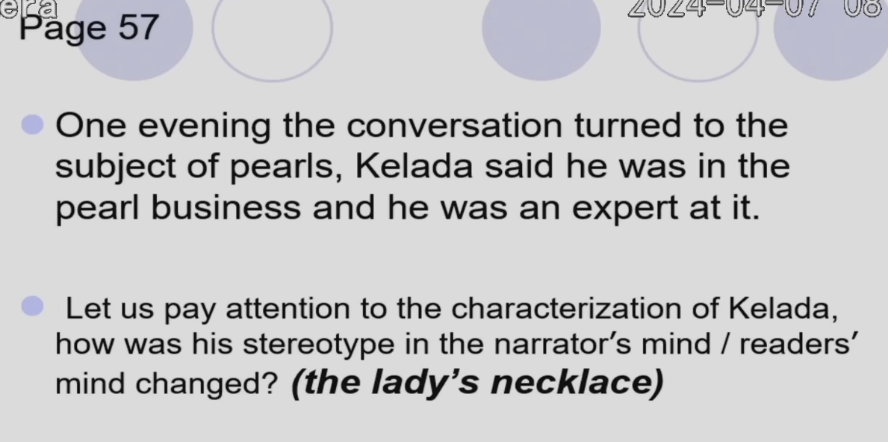
One evening at dinner the conversation by chance drifted to the subject of pearls. There had been in the papers a good deal of talk about the culture pearls which the cunning Japanese were making, and the doctor remarked that they must inevitably diminish the value of real ones. They were very good already; they would soon be perfect. Mr. Kelada, as was his habit, rushed the new topic. He told us all that was to be known about pearls. I do not believe Ramsay knew anything about them at all, but he could not resist the opportunity to have a fling at the Levantine, and in five minutes we were in the middle of a heated argument. I had seen Mr. Kelada vehement and voluble before, but never so voluble and vehement as now. At last something that Ramsay said stung him, for he thumped the table and shouted:
"Well, I ought to know what I am talking about. I'm going to Japan just to look into this Japanese pearls business. I'm in the trade and there's not a man in it who won't tell you that what I say about pearls goes. I know all the best pearls in the world, and what I don't know about pearls isn't worth knowing."
Here was news for us, for Mr. Kelada, with all his loquacity, had never told anyone what his business was. We only knew vaguely that he was going to Japan on some commercial errand. He looked round the table triumphantly.
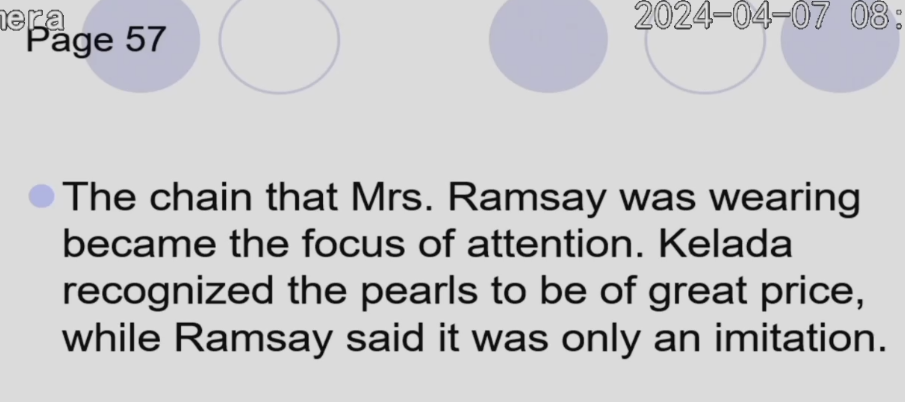
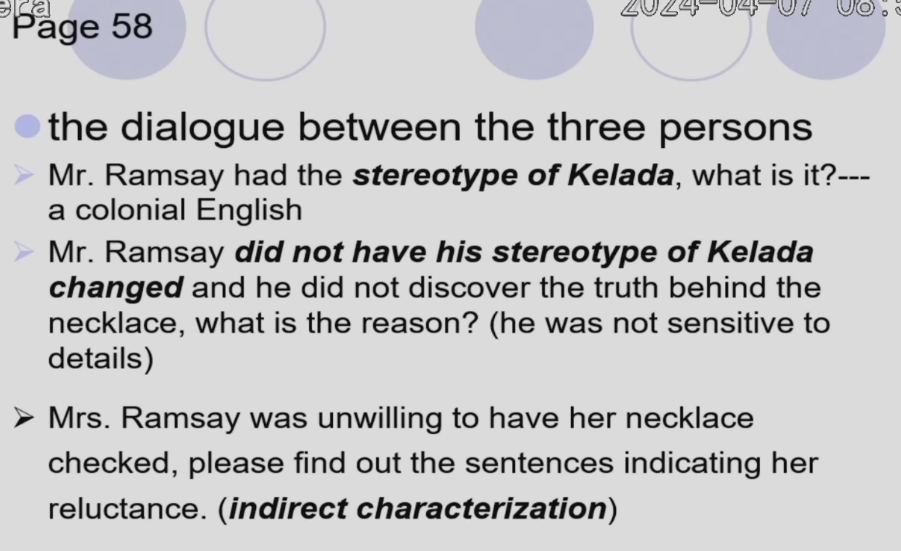
"They'll never be able to get a culture pearl that an expert like me can't tell with half an eye." He pointed to a chain that Mrs. Ramsay wore. "You take my word for it, Mrs. Ramsay, that chain you're wearing will never be worth a cent less than it is now."
Mrs. Ramsay in her modest way flushed a little and slipped the chain inside her dress. Ramsay leaned forward. He gave us all a look and a smile flickered in his eyes.
"That's a pretty chain of Mrs. Ramsay's, isn't it?"
"I noticed it at once," answered Mr. Kelada. "Gee, I said to myself, those are pearls all right."
"I didn't buy it myself, of course. I'd be interested to know how much you think it cost.""
Oh, in the trade somewhere round fifteen thousand dollars. But if it was bought on Fifth Avenue I shouldn't be surprised to hear that anything up to thirty thousand was paid for it."
Ramsay smiled grimly.
"You'll be surprised to hear that Mrs. Ramsay bought that string at a department store the day before we left New York, for eighteen dollars."
Mr. Kelada flushed. "Rot. It's not only real, but it's as fine a string for its size as I've ever seen."
"Will you bet on it? I'll bet you a hundred dollars it's imitation."
"Done."
"Oh, Elmer, you can't bet on a certainty," said Mrs. Ramsay.
She had a little smile on her lips and her tone was gently deprecating."
Can't I? If I get a chance of easy money like that I should be all sorts of a fool not to take it."
"But how can it be proved?" she continued. "It's only my word against Mr. Kelada's."
"Let me look at the chain, and if it's imitation I'll tell you quickly enough. I can afford to lose a hundred dollars," said Mr. Kelada.
"Take it off, dear. Let the gentleman look at it as much as he wants."
Mrs. Ramsay hesitated a moment. She put her hands to the clasp.
"I can't undo it," she said. "Mr. Kelada will just have to take my word for it."
I had a sudden suspicion that something unfortunate was about to occur, but I could think of nothing to say.
Ramsay jumped up.
"I'll undo it."
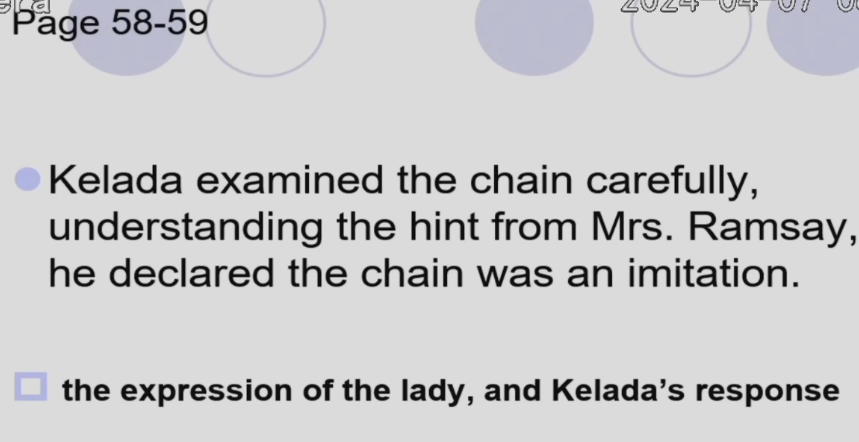
He handed the chain to Mr. Kelada. The Levantine took a magnifying glass from his pocket and closely examined it. A smile of triumph spread over his smooth and swarthy face. He handed back the chain. He was about to speak. Suddenly he caught sight of Mrs. Ramsay's face. It was so white that she looked as though she were about to faint. She was staring at him with wide and terrified eyes. They held a desperate appeal; it was so clear that I wondered why her husband did not see it.
Mr. Kelada stopped with his mouth open. He flushed deeply. You could almost see the effort he was making over himself.
"I was mistaken," he said. "It's a very good imitation, but of course as soon as I looked through my glass I saw that it wasn't real. I think eighteen dollars is just about as much as the damned thing's worth."
He took out his pocket-book and from it a hundred-dollar note. He handed it to Ramsay without a word.
"Perhaps that'll teach you not to be so cocksure another time, my young friend," said Ramsay as he took the note.
I noticed that Mr. Kelada's hands were trembling.
The story spread over the ship as stories do, and he had to put up with a good deal of chaff that evening. It was a fine joke that Mr. Know-All had been caught out. But Mrs. Ramsay retired to her state-room with a headache.
Next morning I got up and began to shave. Mr. Kelada lay on his bed smoking a cigarette. Suddenly there was a small scraping sound and I saw a letter pushed under the door. I opened the door and looked out. There was nobody there. I picked up the letter and saw that it was addressed to Max Kelada. The name was written in block letters. I handed it to him.
"Who's this from?" he opened it. "Oh!"
He took out of the envelope, not a letter, but a hundred-dollar note. He looked at me and again he reddened. He tore the envelope into little bits and gave them to me.
"Do you mind just throwing them out of the port-hole?"
I did as he asked, and then I looked at him with a smile.
"No one likes being made to look a perfect damned fool," he said.
"Were the pearls real?"
"If I had a pretty little wife I shouldn't let her spend a year in New York while I stayed at Kobe," said he.
At the moment, I did not entirely dislike Mr. Kelada. He reached out for his pocket-book and carefully put in it the hundred-dollar note.

yf的资料
Mr.Know-all
"Mr. Know-All" is a short story by British writer W. Somerset Maugham, renowned for his sharp wit and insightful observations of human nature. The story is set on a passenger ship traveling from San Francisco to Yokohama and narrates the interactions among the passengers, focusing particularly on a character named Max Kelada, who is disparagingly referred to as "Mr. Know-All."
Key elements of the story include:
- Narrator and Point of View: The story is narrated in the first person by a fellow passenger, who initially harbors prejudices against Kelada. This perspective is crucial as it captures the narrator's changing perceptions of Kelada throughout the story.
- Character of Max Kelada (Mr. Know-All): Kelada is a gregarious, boisterous man of Middle Eastern origin, known for his expansive knowledge on seemingly every subject. His extroverted personality and tendency to dominate conversations earn him the nickname "Mr. Know-All." Despite his annoying traits, Kelada is depicted as a man of principles and unexpected depth.
- Themes of Prejudice and Tolerance: The story explores themes of prejudice and tolerance, particularly through the narrator's initial disdain for Kelada based on stereotypes and first impressions. The narrative gradually reveals Kelada's more admirable qualities, challenging the narrator's (and the reader's) preconceived notions.
- Climax and Moral Complexity: The climax of the story revolves around a bet about the authenticity of a woman's pearl necklace, leading to an unexpected twist that reveals Kelada's sensitivity and discretion. This incident significantly alters the narrator's opinion of Kelada, adding complexity to the moral of the story.
- Cultural and Social Commentary: Maugham uses the character of Kelada to comment on cultural stereotypes and the social dynamics of the time, particularly in the context of British society and its attitudes towards people from different cultural backgrounds.
- Maugham's Writing Style: Maugham's writing is known for its clear, unadorned style, and "Mr. Know-All" is no exception. The story's straightforward narration is effective in delivering its themes and character insights without unnecessary embellishment.
"Mr. Know-All" is a deftly crafted story that uses its confined setting—a ship's cabin—and its small cast of characters to explore larger themes of human nature, judgment, and the capacity for change in attitudes and beliefs.
The character of Mr. Max Kelada in W. Somerset Maugham's "Mr. Know-All" is vividly drawn and features several distinct traits:
- Talkative and Boastful: Mr. Kelada is portrayed as extremely talkative and somewhat boastful. He has an opinion on everything and doesn't hesitate to share it, often dominating conversations with his vast knowledge on a wide array of topics.
- Knowledgeable and Well-Informed: Despite his sometimes overbearing nature, Kelada is genuinely knowledgeable. He seems to be well-informed about various subjects, from politics to pearls, which justifies his nickname "Mr. Know-All" to some extent.
- Outgoing and Sociable: Kelada is highly sociable and engages with everyone on the ship. He does not seem to be deterred by the annoyance or disapproval of others and continues to involve himself enthusiastically in social activities.
- Patriotic and Proud of His Heritage: Mr. Kelada is proud of his roots. He expresses strong patriotic feelings, particularly when discussing his heritage, which is implied to be of Middle Eastern origin.
- Sensitive and Considerate: Despite his outward confidence and assertiveness, Kelada displays sensitivity and consideration, especially in the story's climax. His actions in the incident involving the pearl necklace reveal a depth of character and understanding that surprises both the narrator and the reader.
- Resilient to Prejudice: Kelada faces prejudice and stereotyping from his fellow passengers, particularly the narrator, due to his ethnicity and mannerisms. However, he shows resilience in the face of these attitudes, maintaining his cheerful demeanor and confidence.
- Generosity and Honesty: He is also depicted as generous and honest. This is particularly evident in his willingness to engage with others and his actions at the end of the story, which reflect a high level of integrity.
Through the character of Mr. Kelada, Maugham explores themes of cultural identity, stereotyping, and the often-surprising complexity of human character. Kelada's personality serves as both a source of humor and a vehicle for challenging the reader's own prejudices and assumptions.